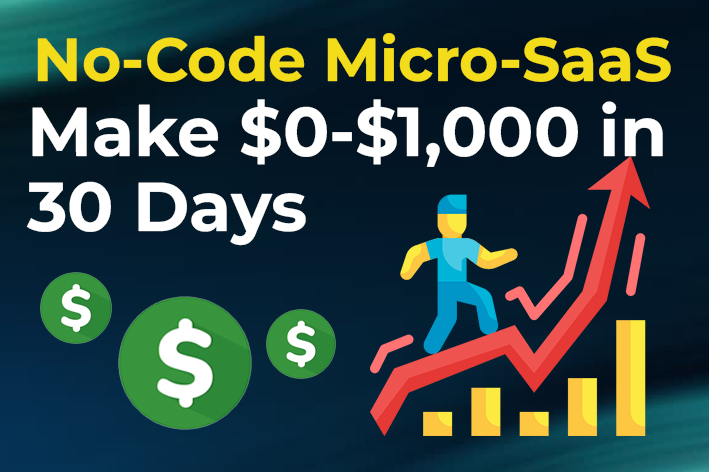
Launching a startup in today’s digital era can be challenging, especially if you lack technical expertise. Fortunately, the rise of No-Code Micro-SaaS has made it possible for non-technical founders to create fully functional software products without writing a single line of code.
This revolutionary approach allows entrepreneurs to build, test, and scale their ideas faster, more affordably, and efficiently.
In this blog, we will explore No-Code Micro-SaaS, the tools that make it possible, and how you can leverage them to create profitable, subscription-based software products.
What Is No-Code Micro-SaaS?
No-Code Micro-SaaS combines the simplicity of no-code platforms with the power of Micro-SaaS business models. Essentially, it allows founders to create small-scale, niche software products that generate recurring revenue, all without programming skills.
Micro-SaaS products focus on very specific problems within targeted audiences. By using No-Code Micro-SaaS platforms, entrepreneurs can quickly launch Minimum Viable Products (MVPs), test their ideas, and scale them based on real user feedback.
Why It Matters:
- Reduces development costs
- Speeds up product launch
- Enables anyone to become a software founder
Benefits of No-Code Micro-SaaS for Startups
The use of No-Code Micro-SaaS offers several key benefits for startups:
- Fast Time-to-Market – Products can be launched in days rather than months.
- Low Costs – There’s no need to hire expensive developers or a full tech team.
- Targeted Solutions – Micro-SaaS allows you to solve specific niche problems, making it easier to attract paying customers.
- Easy Iteration – Rapid updates can be implemented without coding knowledge.
- Automation – Many no-code platforms include workflow automation, reducing manual tasks.
With these advantages, No-Code Micro-SaaS empowers startups to compete with larger companies while minimizing risk and overhead.

Top No-Code Tools to Build Your Micro-SaaS
Several no-code platforms are ideal for creating No-Code Micro-SaaS products. Here are the most effective ones:
1. Bubble
🔗 https://bubble.io/
Bubble allows you to design fully functional web applications visually. With drag-and-drop interfaces, database integration, and API support, it’s perfect for building complex Micro-SaaS products.
2. Glide
🔗 https://www.glideapps.com/
Glide converts Google Sheets into mobile apps. For simple No-Code Micro-SaaS tools that rely on structured data, Glide enables rapid prototyping and deployment.
3. Adalo
🔗 https://www.adalo.com/
Adalo specializes in native mobile apps, supporting features like user authentication, payments, and notifications—essential for subscription-based Micro-SaaS products.
4. Webflow
🔗 https://webflow.com/
Webflow provides robust website design and CMS capabilities, allowing founders to create landing pages, dashboards, or SaaS front-ends without writing code.
5. Zapier & Make (Integromat)
🔗 https://zapier.com/ | 🔗 https://www.make.com/
Automation is a key part of No-Code Micro-SaaS. Zapier and Make help automate workflows, integrate apps, and manage repetitive tasks efficiently.
Want Free Premium Bundles and Tools?
How to Launch a No-Code Micro-SaaS Product
Launching a successful No-Code Micro-SaaS requires a clear strategy. Here’s a step-by-step guide:
- Identify a Niche Problem – Focus on a specific audience with a clear pain point.
- Validate Your Idea – Use surveys, landing pages, or prototypes to test market interest.
- Build an MVP – Develop a minimum viable product using no-code tools.
- Automate Processes – Integrate workflows, notifications, and payments using automation tools.
- Collect Feedback and Iterate – Use user feedback to refine features and improve your product.
By following this approach, startups can minimize risk and maximize efficiency using No-Code Micro-SaaS tools.
Advantages and Challenges of No-Code Micro-SaaS
Advantages:
- Accessible to non-technical founders
- Affordable to start and scale
- Quick to deploy and test ideas
- Highly flexible and adaptable
Challenges:
- Scalability may be limited by the platform
- Advanced features may require traditional coding
- Dependency on third-party platforms
Despite these challenges, the No-Code Micro-SaaS model remains one of the most accessible and profitable ways for modern entrepreneurs to enter the software market.
Conclusion
The rise of No-Code Micro-SaaS has revolutionized entrepreneurship. It empowers non-technical founders to create subscription-based software, solve niche problems, and generate recurring revenue
all without coding. By leveraging no-code tools, startups can build, launch, and scale products faster than ever before.
For anyone looking to start a software business with minimal risk and investment, No-Code Micro-SaaS is no longer just an option—it’s a necessity.
FAQs About No-Code Micro-SaaS
1. What is No-Code Micro-SaaS?
No-Code Micro-SaaS is a business model where small, niche software products are built without coding. Entrepreneurs use no-code platforms to create subscription-based applications that solve specific problems for targeted audiences.
2. How can I start a No-Code Micro-SaaS business?
To start, identify a niche problem, validate the idea, build a minimum viable product (MVP) using no-code tools like Bubble, Glide, or Adalo, automate workflows with Zapier or Make, and launch. Collect user feedback to iterate and improve the product.
3. Are no-code tools suitable for beginners?
Yes! No-code platforms are designed to be intuitive. They allow anyone even without programming knowledge to build web apps, mobile apps, and automation workflows effectively.
4. What are the best no-code tools for Micro-SaaS?
Some of the most popular tools include:
- Bubble – for full web apps
- Glide – for data-driven mobile apps
- Adalo – for native mobile apps with subscription features
- Webflow – for website front-ends
- Zapier / Make – for automation
These tools provide the flexibility needed for small-scale SaaS products.
5. What are the benefits of using No-Code Micro-SaaS?
- Low development costs
- Fast time-to-market
- Targeted niche solutions
- Easy iteration and updates
- Automation of repetitive tasks
6. Are there challenges in using No-Code Micro-SaaS?
Yes. Potential challenges include platform limitations, customization restrictions for complex features, and dependency on third-party tools. However, for early-stage startups, the benefits usually outweigh the challenges.
7. How can I make my No-Code Micro-SaaS profitable?
Focus on subscription-based revenue, target specific niche markets, provide real value, and continuously improve your product based on customer feedback. Combining automation with niche targeting makes the model highly scalable.
8. What is Nexoraith?
Nexoraith is an AI agency that provides premium paid tools, paid bundles, and solutions to help businesses boost sales, increase revenue, and acquire more clients. While this blog focuses on free and no-code tools, Nexoraith offers advanced solutions for startups and businesses looking for scalable growth with paid, high-performance software.
9. Can No-Code Micro-SaaS tools integrate with my existing business systems?
Yes. Most no-code platforms allow integrations with popular apps and services through APIs or automation tools like Zapier and Make, making it easy to connect your Micro-SaaS product with your existing workflows.
10. Do I need technical knowledge to scale a Micro-SaaS product?
Basic tech understanding helps, but no-code tools significantly reduce the need for technical skills. As your user base grows, you may need developers for highly complex features, but the majority of early growth can be achieved without coding.
About the Author